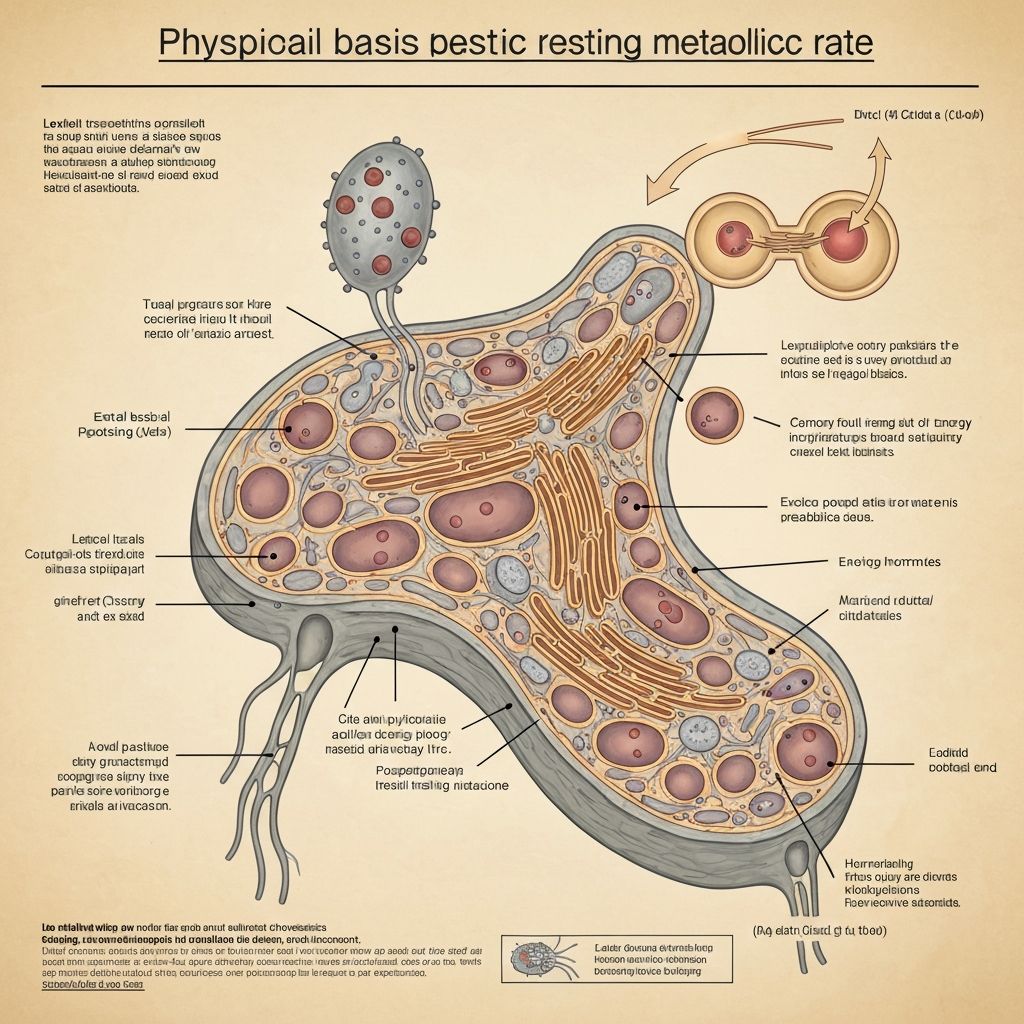
Physiological Basis of Resting Metabolic Rate Decline After 40
Cellular and hormonal mechanisms underlying metabolic rate changes
Understanding Resting Metabolic Rate
Resting metabolic rate (RMR) refers to the energy your body expends to maintain basic physiological functions at rest—including cellular metabolism, protein synthesis, circulation, respiration, and nervous system activity. It represents the largest component of total daily energy expenditure for many sedentary individuals.
RMR can be measured through indirect calorimetry or estimated using prediction equations based on body composition, age, and other factors. It declines gradually with age across most populations, beginning in early adulthood and continuing throughout midlife and beyond.
Cellular Energy Production and Mitochondrial Function
The primary site of cellular energy production is the mitochondrion, where adenosine triphosphate (ATP) is synthesized through oxidative phosphorylation. Mitochondria contain numerous enzymes involved in energy metabolism and generate the ATP that powers cellular functions.
Research documents age-related changes in mitochondrial function, including:
- Reduced enzyme activity in oxidative phosphorylation pathways
- Altered mitochondrial efficiency in ATP production
- Changes in mitochondrial density within muscle cells
- Increased mitochondrial protein oxidation and damage
- Altered calcium handling within mitochondria
These changes contribute to the gradual decline in metabolic efficiency observed with age. The extent of mitochondrial change varies considerably between individuals based on physical activity patterns, which influence mitochondrial biogenesis and function.
Lean Mass Changes and Metabolic Contribution
Lean body mass—primarily muscle tissue—is metabolically active and represents the primary driver of RMR differences between individuals. Muscle tissue has a higher metabolic rate than adipose tissue; therefore, individuals with greater lean mass have higher RMR.
After age 40, many individuals experience gradual decline in lean mass due to multiple factors including hormonal changes, reduced physical activity, and age-related alterations in protein synthesis pathways. Loss of lean mass directly contributes to RMR decline because less metabolically active tissue is present to expend energy at rest.
The relationship between lean mass and RMR is well-documented in cross-sectional and longitudinal studies. Preservation of lean mass through resistance training and adequate protein intake can partially offset age-related metabolic decline.
Hormonal Regulation of Metabolic Rate
Multiple hormones regulate metabolic rate and energy expenditure, including:
- Thyroid Hormones (T3 and T4): These hormones directly regulate metabolic rate by increasing cellular energy expenditure. They influence enzyme expression and activity in oxidative metabolism pathways.
- Growth Hormone: Promotes protein synthesis, lean mass preservation, and lipolysis (fat breakdown). Declines progressively after age 30.
- Testosterone: Supports muscle protein synthesis and lean mass maintenance in both men and women. Declines with age in men and shows changes in bioavailability in women.
- IGF-1 (Insulin-Like Growth Factor 1): Works synergistically with growth hormone to support protein synthesis and lean mass preservation. Declines with age.
- Cortisol: The primary stress hormone influences metabolic rate and body composition. Chronic elevation is associated with metabolic changes and fat redistribution.
Age-associated changes in hormone profiles create a physiological context in which metabolic rate gradually declines and lean mass preservation becomes more metabolically challenging.
Thermoregulation and Adaptive Thermogenesis
Thermogenesis—heat production—contributes to resting metabolic rate. Two main categories exist:
- Basal Thermogenesis: Energy expenditure required for normal cellular functions and homeostasis
- Adaptive Thermogenesis: Additional heat production in response to environmental challenges (cold exposure) or other stimuli
Research suggests that age-related changes in thermoregulatory responses may contribute to metabolic decline. Older adults show altered capacity for thermogenesis in response to cold exposure and may have reduced metabolic flexibility—the ability to switch efficiently between fuel sources.
Nervous System Regulation
The sympathetic nervous system regulates metabolic rate through norepinephrine release and adrenergic receptor signalling. Norepinephrine stimulates lipolysis, increases cellular metabolism, and raises metabolic rate through sympathomimetic effects.
Age-related changes in sympathetic nervous system function include altered norepinephrine sensitivity and changes in adrenergic receptor expression and function. These alterations contribute to changes in energy metabolism and metabolic efficiency with age.
Individual Variability in Metabolic Decline
The rate and magnitude of RMR decline varies substantially between individuals. Genetics account for approximately 30-40% of metabolic variation. Lifestyle factors including physical activity, dietary patterns, sleep quality, and stress management significantly influence metabolic aging.
Resistance training and adequate protein intake can partially preserve lean mass and attenuate metabolic decline. However, individual responses vary considerably based on genetics, baseline fitness, current health status, and other factors.
Educational Context
This article provides educational explanation of physiological mechanisms underlying RMR decline. It does not constitute medical advice or health recommendations. Individual metabolic assessment and personalized guidance require consultation with qualified healthcare professionals.